
Smart casual dress code explained: what to wear and how to style it
Smart casual remains one of the most misunderstood dress codes. The term appears on invitations, in office policies, and on restaurant websites, yet few people agree on what it means. Some interpret it as a licence to wear chinos and trainers. Others assume it requires a blazer. The reality lies between extremes, and once you understand the framework, dressing for smart casual becomes straightforward.
This guide clarifies the definition, identifies the core pieces that belong in a smart casual wardrobe, and provides outfit formulas for different contexts. You will know what works, what does not, and how to build a versatile rotation that covers most situations.
What is smart casual? Definition and context
Smart casual means polished but not formal. It sits above casual weekend wear and below business attire. You will not wear a tie, but you cannot rely on T-shirts and distressed denim either. The code expects clean lines, structured pieces, and intentional choices.
The context matters. Smart casual at a summer wedding differs from smart casual at a Friday meeting. Both require considered dressing, but the first allows lighter fabrics and bolder colour, while the second favours restraint. The common thread is polish without stiffness.
Most mistakes stem from confusing smart casual with business casual. Business casual still leans formal. Smart casual permits more texture, relaxed tailoring, and footwear that would not pass in a boardroom. Think unlined blazers, knitted polos, and loafers for men instead of oxfords.
Smart casual for men: core wardrobe pieces
A functional smart casual wardrobe contains fewer items than you might expect. You need pieces that layer well, fit correctly, and work across multiple combinations.
Start with tailored trousers in mid-grey, navy, or beige. Avoid pleats unless the cut is deliberately relaxed. A straight or slightly tapered leg works for most builds. Chinos belong here too, provided the fabric has body and the fit is trim through the thigh.
Knitwear bridges the gap between casual and smart. A fine-gauge merino crew-neck or V-neck sits over a shirt or wears alone. Avoid chunky cable knits unless the setting is genuinely informal. Stick to neutral tones that pair with everything.
Shirts in oxford cloth, linen, or poplin form the backbone. You do not need stiff collar stays or French cuffs. A button-down collar softens the formality, while a spread collar can work under a casual blazer. White, pale blue, and ecru cover most needs.
An unstructured blazer completes the rotation. Look for natural shoulders, patch pockets, and breathable cloth. Navy, grey, and tobacco brown all work. The blazer should feel relaxed but still hold its shape. Pair it with trousers that do not match the jacket fabric, unless you intend to wear a suit.
Footwear that works: derbys, loafers, and clean sneakers
Footwear anchors a smart casual outfit. The wrong shoes undermine everything above the ankle. The right pair ties the look together without effort.
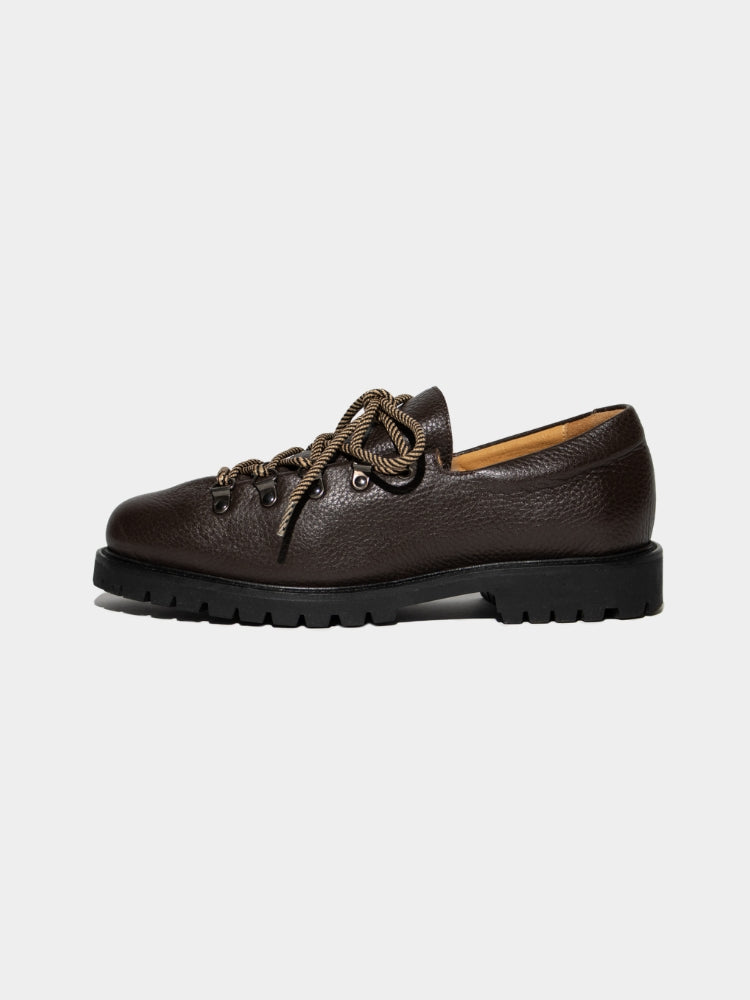
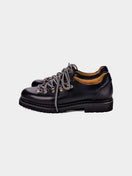
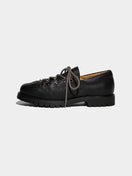
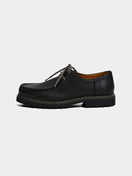
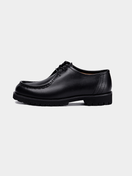
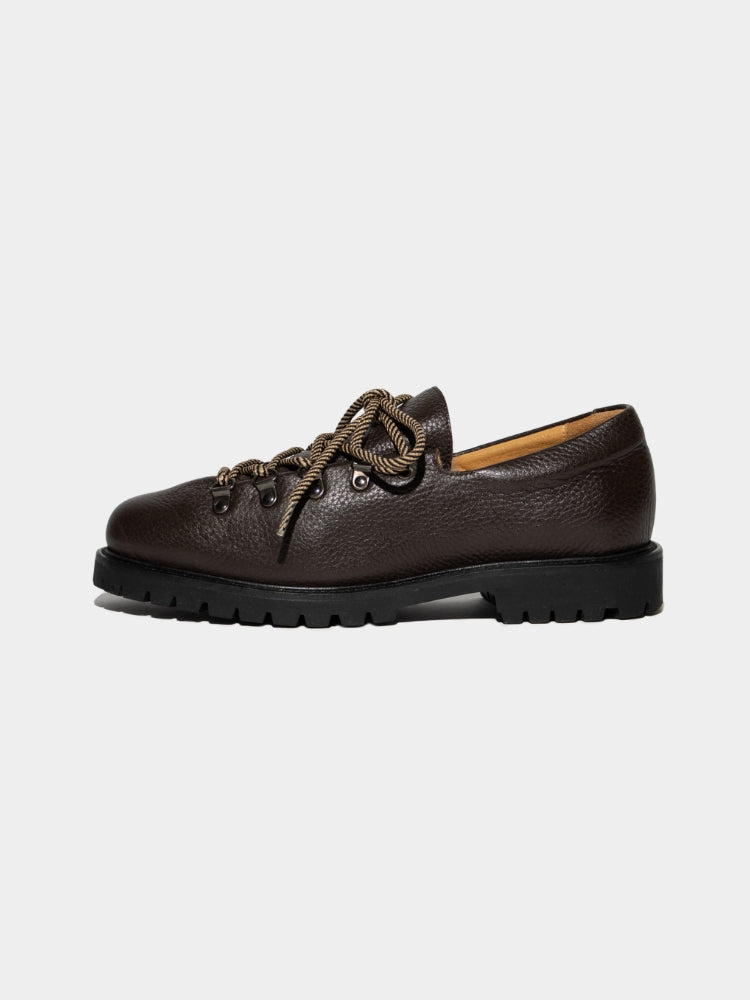
Derby shoes are the safest choice. They offer the structure of a lace-up with less formality than an oxford. A plain-toe derby in dark brown or black leather works for most smart casual settings. Men's brown derby shoes pair well with grey trousers, navy chinos, and lighter fabrics in summer.
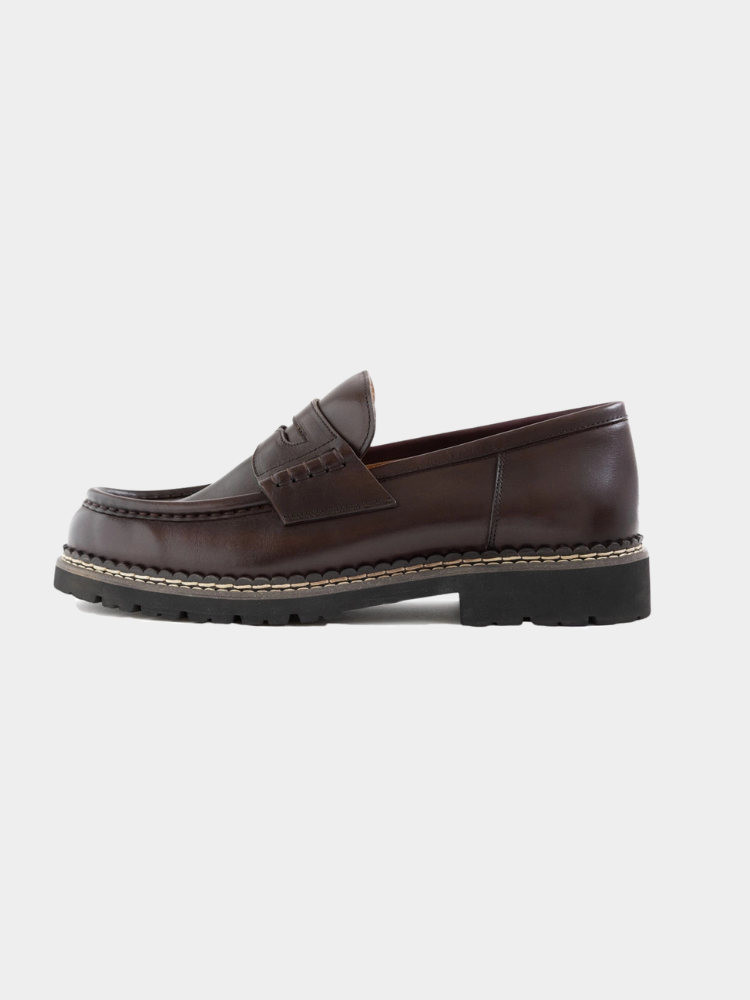
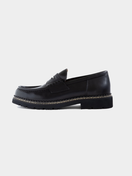
Loafers sit just below derbys in formality. Penny loafers men favour for their clean lines and slip-on convenience. Suede versions soften the look further and suit warmer months. Avoid loafers with heavy decorative stitching or exaggerated tassels.
Clean leather trainers occupy the lower boundary of smart casual. They work in creative industries and casual Friday settings but remain too informal for client meetings or evening events. The trainer must be minimal, free from logos, and in neutral tones. White leather or grey suede fit the brief. Chunky soles and technical detailing do not.
Outfit formulas for different smart casual occasions
Once you own the core pieces, assembling outfits becomes a matter of context. These formulas cover the most common smart casual scenarios.
For a Friday at the office, pair tailored navy trousers with a pale blue oxford shirt and a fine-gauge grey crew-neck. Add brown derbys. Leave the blazer at your desk unless a meeting requires it. The outfit reads polished without leaning corporate.
A weekend lunch with friends calls for beige chinos, a white linen shirt worn untucked, and tobacco suede loafers. Roll the sleeves once. The look stays casual but intentional. Swap the loafers for clean trainers if the venue is genuinely relaxed.
An evening event such as a gallery opening or informal dinner suits a mid-grey unstructured blazer over a white shirt, dark indigo chinos, and black leather derbys. Skip the tie. The combination balances formality and ease.
For a summer wedding marked smart casual, try an unlined navy blazer, stone chinos, a pale pink oxford shirt, and brown penny loafers. The lighter palette suits the season, and the lack of a tie keeps the outfit from feeling rigid.
Common smart casual mistakes to avoid
Smart casual invites interpretation, but certain choices consistently miss the mark.
Wearing jeans with visible distressing, heavy fading, or low rise undermines the polished tone. If you wear denim, choose a dark, clean wash with a straight leg. Pair it with structured pieces to balance the informality.
Oversized or poorly fitted garments signal carelessness. Smart casual depends on proportion. Trousers should break lightly on the shoe. Shirts should not pull across the chest or billow at the waist. Blazers need enough room in the shoulder without drooping.
Loud patterns and graphic prints rarely belong. A subtle check or fine stripe adds interest without distraction. Anything bolder risks looking costume-like unless the context specifically invites it.
Neglecting footwear is the fastest route to failure. Scuffed leather, worn-down heels, and dirty trainers all communicate indifference. Polish derbys regularly. Replace loafers when the sole wears through. Keep trainers box-fresh.
Building a versatile smart casual wardrobe
A smart casual wardrobe does not require endless options. Six to eight pieces in neutral tones will cover most situations.
Start with two pairs of trousers: one in navy, one in mid-grey or beige. Add two long-sleeve shirts in white and pale blue. Include one fine-gauge knit in grey or navy. Invest in a single unstructured blazer in a colour that works with both trouser options.
For footwear, own one pair of brown derbys and one pair of loafers in either brown or black. If your work or social life includes genuinely casual smart casual settings, add minimal leather trainers.
Once the foundation exists, you can introduce texture and variation. A chambray shirt, a lightweight rollneck, or a pair of stone chinos broaden your range without requiring new outfit formulas.
Smart casual rewards clarity. The dress code asks for polish, not perfection. You do not need formalwear, but you cannot rely on instinct alone. The boundaries are clear once you understand them. Derby shoes, tailored trousers, and considered layering solve most situations. Everything else is detail.

Af Paper Straight