
Men's Loafers Guide: Styles, Fit, and How to Wear Them
What Are Loafers? A Brief History and Definition
Loafers belong to the slip-on family. No laces, no buckles. The name comes from their association with leisure, though today they cross into formal and smart casual territory with ease.
The style emerged in the 1930s when Norwegian fishermen wore simple moccasin-construction shoes. American shoemakers adapted the design, adding a leather strap across the vamp. By the 1950s, Ivy League students had claimed the penny loafer as their own, slipping coins into the saddle strap for payphone calls. The loafer became shorthand for East Coast prep.
Since then, variations have multiplied. Italian makers introduced the horsebit. Belgians refined a bow-topped house slipper into streetwear. Tassels appeared on Wall Street. Each variant carries slightly different connotations, but all share the same premise: step in, step out, minimal fuss.
Construction usually involves moccasin stitching or a stitched upper wrapped around the foot, though some loafers adopt conventional welt methods. The lack of lacing means fit is fixed. You cannot tighten or loosen them once they are on your feet.
Classic Loafer Styles: Penny, Tassel, Horsebit, and Belgian
Penny Loafers
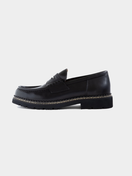
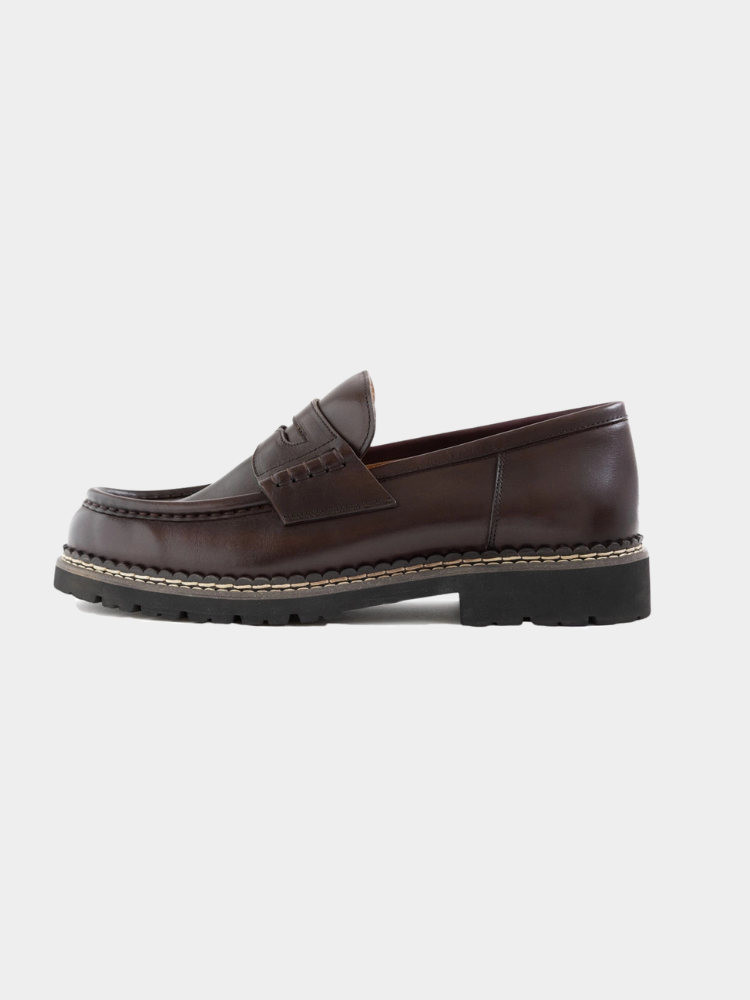
The penny loafer carries a leather strap across the instep, often with a diamond cutout. Originally worn with dimes or pennies tucked inside, the detail now serves purely aesthetic purposes. This is the most versatile loafer. It works with chinos, tailored trousers, even mid-weight denim.
Colour matters. Burgundy leans preppy. Brown in lighter shades suits spring and summer. Black brings formality but risks looking severe unless the rest of your outfit balances it.
Tassel Loafers
Tassel loafers add decorative knotted leather laces to the vamp. They emerged in the 1950s as a dressy alternative to the penny and found favour with lawyers and bankers. The style skews formal. Pair them with wool trousers or a summer-weight suit.
Tassels attract attention. Keep the rest of your outfit restrained. Avoid loud patterns or competing textures.
Horsebit Loafers
Gucci introduced the horsebit in 1953. A metal snaffle sits across the vamp, mimicking equestrian hardware. The design leans toward continental elegance. It pairs well with tailoring that has a softer shoulder or higher trouser rise.
The horsebit can feel ornate in the wrong context. Reserve it for occasions where a little flourish is welcome, not where understatement is required.
Belgian Loafers
Belgian loafers feature a small bow on the vamp and minimal structure. The silhouette is low, the profile sleek. Think of them as refined house slippers made outdoor-appropriate.
They work best sockless or with no-show liners. The aesthetic is relaxed but considered. Pair them with cropped trousers, linen blends, lighter knits. They suit warmer months and coastal settings.
How to Style Loafers for Different Occasions
Smart Casual Settings
Loafers handle the smart casual dress code with ease. Penny and Belgian variants pair cleanly with chinos, tailored denim, or cotton trousers. Keep the colour palette simple. Navy, grey, olive and tan form a stable base.
Add an Oxford shirt, polo or fine-gauge knit on top. Avoid trainers-adjacent styling. Loafers occupy the space between sneakers and formal lace-ups, so treat them accordingly.
In summer, you can go sockless. Ensure the loafer fits snugly enough that your heel does not slip. A small amount of no-show sock liner prevents blisters and absorbs moisture.
Office and Business Environments
Tassel and penny loafers work in business casual offices. Pair them with pressed chinos or wool trousers, a button-down shirt and a blazer if required. Burgundy or dark brown reads more professional than tan.
In traditional corporate settings, loafers sit below Oxfords and brogues in formality. If your office expects polished leather and structured shoes, a laced derby or Oxford is the safer choice. Loafers for men work best where dress codes allow flexibility.
Weekend and Casual Wear
Belgian and penny loafers suit weekends. Wear them with denim, chore jackets, overshirts or relaxed knitwear. Roll your trousers slightly to expose the ankle and create a clean break.
Avoid pairing loafers with overly technical fabrics or athleisure pieces. They belong to a tailored, analogue aesthetic. If your outfit includes performance materials or sporty silhouettes, trainers will serve you better.
Loafers vs Derbys: Choosing the Right Slip-On or Lace-Up
Loafers offer speed and simplicity. Derbys offer adjustability and structure. The choice depends on your priorities.
A derby shoe uses an open lacing system. You can tighten or loosen the fit across the instep, accommodating slight swelling or thicker socks. This makes them more adaptable across seasons and settings. They also hold their shape more reliably under repeated wear.
Loafers provide convenience. Slip them on in seconds. No knots, no laces dragging through puddles. But the fixed fit means sizing must be exact. Too loose and your heel lifts with every step. Too tight and the vamp digs into your instep.
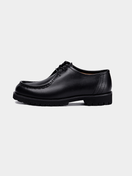
Men's suede derby shoes offer texture and breathability, while remaining easy to dress up or down. If you value versatility and long-term comfort, a well-fitted derby anchors a wardrobe more effectively than a loafer.
Consider your daily routine. If you remove shoes frequently or prefer minimal fuss, loafers make sense. If you walk significant distances, need all-day support, or prefer the structure of a laced shoe, derbys perform better. Both deserve a place in a complete shoe rotation.
Fit and Sizing Tips for Loafers
Loafers should fit snugly from the first wear. Leather will stretch slightly with time, particularly around the widest part of your foot. A small amount of initial tightness is acceptable. Excessive looseness is not.
Your heel should stay in place when you walk. If it slips more than a few millimetres, the loafer is too large. You cannot fix this with thicker socks. The silhouette depends on a close fit.
Check the vamp height. If it sits too low, it may expose too much foot and look unbalanced. If it sits too high, it will press into your instep and cause discomfort.
Width matters as much as length. Loafers are not forgiving. If you have wider feet, look for makers who offer multiple width fittings, or consider shoes for men with a naturally wider last.
Try loafers on in the afternoon when your feet have expanded slightly. Walk on a hard surface to test for heel slip and pressure points. Pay attention to the flex point. It should align with the ball of your foot, not ahead or behind it.
Leather insoles will mould to your foot over time, improving comfort. Synthetic linings do not offer the same adaptation. Choose natural materials where possible.
Building a Versatile Shoe Rotation
A functional wardrobe includes both slip-ons and lace-ups. Start with the shoes you will wear most often, then expand.
If you need one pair of loafers, choose a penny loafer in mid-brown or burgundy. It covers smart casual and semi-formal occasions without appearing overdressed in relaxed settings.
For a second pair, add a derby in suede or smooth leather. The contrast between slip-on and laced shoes gives you flexibility. A derby handles cooler weather better and pairs with heavier fabrics.
If you spend long hours on your feet, prioritise support and construction quality. Best shoes for standing all day require proper arch support, cushioned insoles and durable outsoles. Loafers can meet these needs, but only if the fit is exact and the build solid.
Rotate your shoes. Wearing the same pair daily compresses the insole and prevents leather from drying out properly. Two or three pairs worn in rotation will outlast five pairs worn consecutively.
Clean and condition leather regularly. Brush off dirt after each wear. Apply cream or wax every few weeks, depending on frequency of use. Store shoes with shoe trees to maintain shape and absorb moisture.
Loafers work when you need speed, simplicity and a cleaner aesthetic. They suit certain settings better than others. Understand their limitations and strengths, and they will serve you well. But do not overlook the structural advantages of a laced shoe. A derby offers more control, better long-term fit, and greater versatility across seasons. Build your rotation around what you actually wear, not what looks good in theory.

Von Paper Straight