
Article: What Are Minimalist Shoes? Benefits, Styles, and How to Choose
What Are Minimalist Shoes? Benefits, Styles, and How to Choose
What Defines a Minimalist Shoe? Core Principles
Minimalist shoes prioritise natural foot function over engineered support. They reduce cushioning, drop and structural interference, allowing feet to flex, splay and sense the ground. The definition rests on four material principles: zero or low heel-to-toe drop, thin flexible soles, a wide toe box and minimal upper construction.
Zero drop means the heel and forefoot sit at the same height, removing the artificial lift found in most conventional shoes. Sole thickness typically ranges from three to ten millimetres, depending on intended use. The sole bends easily in hand, permitting the foot's twenty-six bones to articulate freely. The toe box is cut wide enough for toes to spread under load, avoiding compression. Upper materials wrap the foot without stiffening it, often using single-layer textiles or supple leather with minimal reinforcement.
This construction inverts the logic of traditional athletic and dress footwear, which adds arch support, heel counters and cushioning to control motion. Minimalist design assumes the foot is structurally competent and benefits from unimpeded movement. That shift underpins the entire category, from barefoot shoes to more moderate interpretations.
The term barefoot shoes is often used interchangeably with minimalist footwear. Strictly, barefoot shoes aim to simulate unshod walking as closely as possible, while minimalist shoes may retain modest cushioning or structure. In practice, the boundary is fluid. Both reject over-engineering.
Health and Comfort Benefits of Minimalist Footwear
Minimalist shoes recruit intrinsic foot muscles that conventional footwear often leaves idle. Over time, this can improve arch strength, balance and proprioception. Studies on barefoot running suggest reduced impact forces on joints when the foot lands on the midfoot or forefoot, rather than the heel. While research remains mixed, many wearers report fewer overuse injuries once adapted.
The wide toe box alleviates pressure on the forefoot, reducing the risk of bunions, hammertoes and neuromas. Toes that can splay naturally distribute weight more evenly and enhance stability. For those with plantar fasciitis, minimalist footwear may help or hinder, depending on tissue health and transition speed. Tight calves and weak arches can protest during early wear. Gradual adoption matters.
Comfort in minimalist shoes feels different. Initial impressions may register as sparse or exposed, especially if you are accustomed to plush insoles. After an adjustment period, most wearers describe a heightened connection to terrain and less fatigue over long distances. Feet work rather than rest, and that effort can translate into resilience.
Not every foot responds the same way. Pre-existing conditions, gait patterns and tissue mobility all influence outcomes. Minimalist principles offer a framework, not a prescription. The footwear serves those willing to meet it halfway.
Minimalist Design in Dress Shoes: Finding the Balance
Applying minimalist principles to formal footwear requires compromise. A dress shoe must satisfy aesthetic codes that evolved independently of foot health. Sleek silhouettes, polished materials and visible construction methods all shape what reads as appropriate in professional or social settings. Reconciling those expectations with wide toe boxes and flat profiles is possible, but not automatic.
Some brands widen the toe box internally while maintaining a tapered external line, using lasted construction that accommodates splay without appearing clunky. Others accept a rounder toe shape and frame it as contemporary. Sole thickness can be kept low without sacrificing a refined edge profile. The challenge lies in detailing: a minimalist dress shoe must avoid looking technical or unfinished.
Materials matter. Soft leathers mould to the foot and reduce the need for rigid counters. Unlined or lightly lined uppers flex more naturally than heavily reinforced versions. A Blake-stitched or cement construction can keep sole stacks thin, while Goodyear welts add structure that may conflict with minimalist goals.
Best wide toe box shoes for men occupy the intersection of health and style, proving that thoughtful design can serve both. Comfort need not announce itself.
How Paper Straight Derbys Embrace Minimalist Philosophy
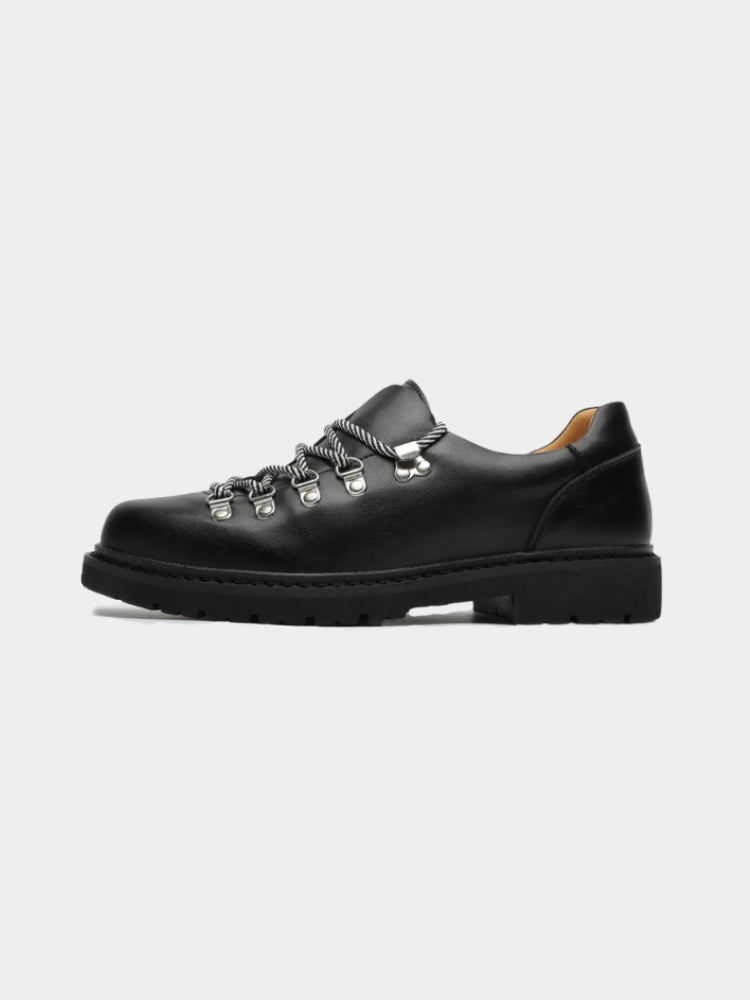
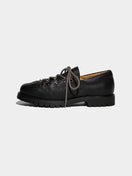
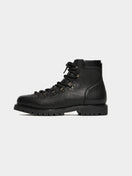
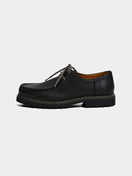
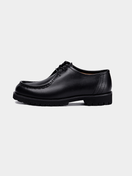
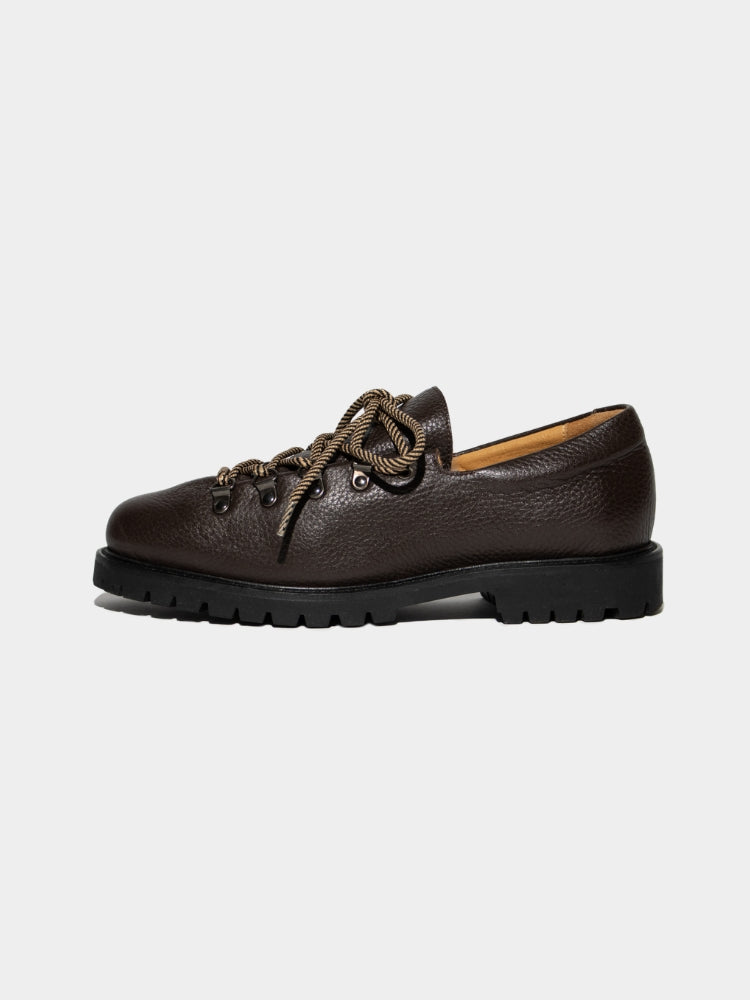
Paper Straight derbys reflect minimalist principles through restrained construction and material choice. The toe box is cut wider than conventional dress shoes, allowing natural toe splay without sacrificing visual proportion. The insole sits flat, with no built-in arch support, trusting the foot to self-regulate. The sole is thin enough to permit ground feel, yet durable enough for urban surfaces.
Every derby is designed in the Netherlands and built around the same essential silhouette. The open lacing system reduces pressure across the instep, accommodating varying foot volumes without excess hardware. Uppers use supple materials that conform rather than constrain, with minimal internal reinforcement. No heel counter forces the Achilles into a fixed position.
This approach does not announce itself. The shoes look like derbys, not like orthotic devices. The minimalist logic operates beneath the surface, shaping comfort and longevity without visual rhetoric. The footwear works quietly, in the way good design should.
International orders include duties, and a fourteen-day return window applies to all purchases.
Transitioning to Minimalist Footwear: Tips and Timeline
Switching to minimalist shoes requires deliberate pacing. Feet conditioned by decades of cushioned, elevated footwear need time to rebuild strength and adapt to new demands. Rushing the process invites tendonitis, stress fractures and plantar strain. A conservative transition period spans three to six months, depending on baseline fitness and daily wear patterns.
Start by wearing minimalist shoes for short, low-impact activities: standing work, walking on flat surfaces, or indoor routines. Alternate with conventional footwear on longer outings. Gradually increase duration as comfort allows, monitoring for soreness in the calves, arches or Achilles tendon. Mild fatigue is normal. Sharp or persistent pain signals overreach.
Strengthening exercises accelerate adaptation. Toe splays, calf raises and balance drills activate dormant muscles and improve proprioception. Stretching the calves and Achilles reduces tension as the body adjusts to a flatter stance. Some wearers benefit from barefoot walking on grass or sand, which recruits stabilisers without impact.
Runners should approach minimalist footwear with particular caution. Impact forces multiply with speed, and stride mechanics often need relearning. Forefoot or midfoot striking becomes necessary as heel cushioning disappears. Transition runs should be short, slow and infrequent at first, supplementing rather than replacing conventional training.
Expect setbacks. Soreness, blisters or temporary discomfort are common. Listen to your body, scale back when needed, and resist the urge to accelerate. The goal is not to prove toughness but to rebuild function. Patience yields results that force cannot.
Minimalist shoes suit those willing to invest in the process. The footwear rewards adaptation, not compliance. For many, the outcome is worth the effort: stronger feet, improved posture and a more grounded sense of movement. For others, partial adoption offers enough benefit without full commitment. There is no single correct endpoint.
Choosing Minimalist Shoes That Suit Your Needs
Selecting minimalist footwear begins with assessing intended use and personal tolerance for change. A first pair should lean moderate rather than extreme: a thin sole with some ground protection, a wide but not cavernous toe box, and flexible but durable materials. Jumping straight to the thinnest, most minimal option increases injury risk and reduces adherence.
Fit is non-negotiable. The toe box must allow full splay without the foot sliding forward. Length should provide a thumb's width of space beyond the longest toe. Width should feel spacious across the ball of the foot, without gaping at the heel. Try shoes later in the day, when feet have expanded slightly, and wear the socks you intend to use.
Material choice influences both comfort and longevity. Leather uppers mould to the foot and breathe well, though they require break-in time. Synthetic textiles offer immediate flexibility and quicker drying, at the cost of reduced durability. Sole rubber should balance grip and ground feel: too hard and traction suffers, too soft and abrasion accelerates.
Best shoes for standing all day often incorporate minimalist features without abandoning all support, making them a useful entry point. The category includes work boots, casual trainers and hybrid designs that ease the transition.
For formal settings, look for derbys or oxfords with flat insoles, flexible construction and anatomical toe shapes. Some brands market these features explicitly, while others embed them quietly. Read specifications carefully, and do not assume that minimalist always means athletic.
If you have a history of foot pain, consult a physiotherapist or podiatrist before committing. Certain conditions respond well to minimalist footwear, while others require targeted support. Professional guidance can clarify where you stand and how quickly to proceed.
Minimalist shoes represent a shift in how footwear relates to the body. They ask more of the wearer and, in return, offer a different kind of comfort. Not everyone will find the trade worthwhile. For those who do, the change can be profound.

Ecrit par Paper Straight